Mastering Household Cash Flow & Emergency Liquidity
Unforeseen financial events—such as urgent vehicle repairs, emergency medical co-pays, or sudden plumbing failures—can create immediate cash flow shortfalls between standard payroll cycles. Navigating these liquidity gaps requires structured budgeting, clear understanding of financing costs, and a disciplined roadmap toward building long-term emergency reserves.
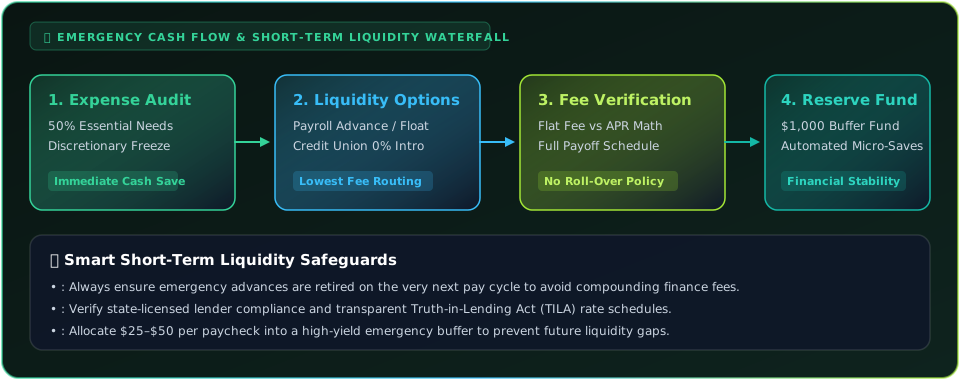
1. The 50/30/20 Household Budgeting Blueprint
The foundation of resilient cash flow management is allocating net monthly income into three disciplined buckets:
- 50% Essential Needs: Housing (rent/mortgage), utilities, groceries, transportation, and required minimum debt obligations.
- 30% Discretionary Wants: Dining out, entertainment, subscriptions, and non-essential consumer purchases. (During cash flow emergencies, this bucket should be frozen immediately).
- 20% Savings & Debt Acceleration: Emergency reserve accumulation, high-interest debt payoffs, and retirement savings.
2. Evaluating Short-Term Liquidity Channels
When an emergency expense arises and liquid savings are unavailable, consumers must evaluate the total cost of capital across available options:
| Financing Option | Typical Funding Speed | Cost Structure | Best Practices |
|---|---|---|---|
| Employer Payroll Advance | 1–2 business days | Zero or nominal fee | Request advance only for verified essential emergencies; repay on subsequent pay period. |
| Credit Union PAL Loan | 2–3 business days | Capped APR ($le 28%$) | Apply through local federal credit unions for structured 1-to-6 month installment repayment. |
| Short-Term Emergency Advance | Same-day / Instant | State-regulated flat fee | Use strictly for single-cycle emergency needs; avoid multi-cycle rollovers. |
3. Transparent Fee & APR Mathematics
The Truth in Lending Act (TILA) requires all consumer lenders to disclose the Annual Percentage Rate (APR) alongside flat dollar financing charges. For short-term advances held for 14 days, a $15 fee per $100 borrowed represents a fixed 15% transactional charge. Consumers must ensure that full payoff is executed on the following pay date to eliminate cumulative finance fees.
4. Building a $1,000 First-Line Emergency Buffer
The ultimate safeguard against financial volatility is establishing a dedicated $1,000 Starter Emergency Fund in a separate, high-yield savings account:
- Automate Micro-Transfers: Schedule an automated transfer of $25 to $50 from every direct deposit directly into your emergency reserve.
- Conduct a Subscription Audit: Cancel unused digital streaming services and recurring memberships to redirect $40–$100 monthly into savings.
- Monetize Unused Assets: Sell surplus electronics, tools, or household goods to seed your initial reserve fund in under 30 days.